
Making it in The City
What happens when abandoning organic life for atomization & lies becomes an ethos?


Colin Tobin, Outmigration (cropped), art print
It’s been a while since an oral history / rise of Clown World post. For newer readers, these use the Gen X perspective on an earlier phase of the House of Lies to look for practical observations. Social or cultural observations that may be useful now, as our current Clown World circles the bowl and the future isn’t bright enough that shades are needed.
It’s been my take for a while that the best path forward is organic. Not the produce category, but responsibility for natural social connections in strategic areas. That’s a pretty general definition, but adapting to uncertainty and degeneration isn’t a clear road map. General conclusions are more widely applicable.
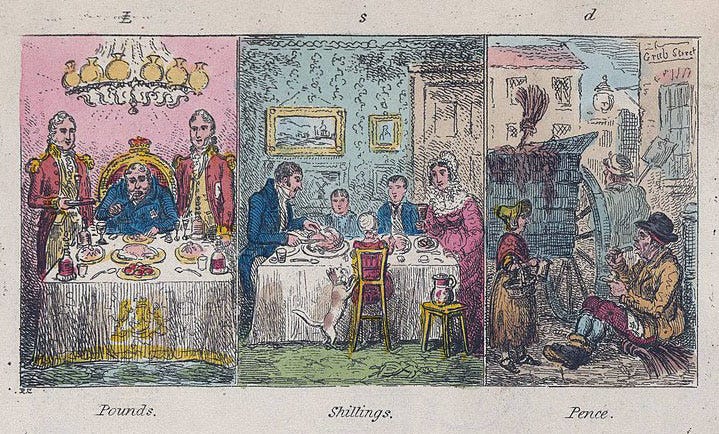
Isaac Robert Cruikshank, Pounds. Shillings. Pence, 1830, print
Context is a big part of why social status can be messy - places and settings are coded for different prestige levels. The leader of the pack in some assumed backwater doesn’t even register somewhere in elite society. This isn’t a moral judgement - elite society has been horrific lately. But morality is only one situational part of status equations. Any society - however defined - is a set of rules, codes, and expectations that define “in” or “out”, and those distinctions are essential parts of status.
Jacob Ochtervelt, Street Musicians at the Door, 1665, oil on canvas, Saint Louis Art Museum
Awareness of context is as old as first group socialization experiences, when it’s obvious some kids are more desirable/exclusive than others. Big catchment middle and high schools made it more obvious and media reinforced with scenarios not seen IRL in the NUC. But nothing made it more obvious than getting shipped out to Special Boy College in the Black Monday Wall Street era.
Every second car seemed like a Mercedes or BMW while my town didn’t even have those dealerships. The ORR skills developed over my teens revealed an unbridgeable gulf from the exclusive club types. I didn’t have skis, let alone a Vermont ski chalet. And Aspen was right out.

That was also the brief “meritocracy” era, when the thumb on the admissions scale was heavy but not prohibitive. Enrollment was over 50% male. My circles were mostly middle to upper-middle class types who largely don’t exist in these places anymore. [Note for younger readers. That class structure doesn’t really exist anymore, but echoes of it can still be seen among boomer areas. My difference in status among them and the future House of Lies elites was its own social education.]

The relevance to this post is the contrast. Because the point is a larger socio-cultural phenomenon than SBC history. An underrated factor in breaking down the generational renewal that made manageable local community possible. Something we could call the “make it in the city” era. The pop culture messaging that where you were from was dullsville nowhere and New York was where you had to get to was endless. Other urban cores could suffice, but The City was the archetype.
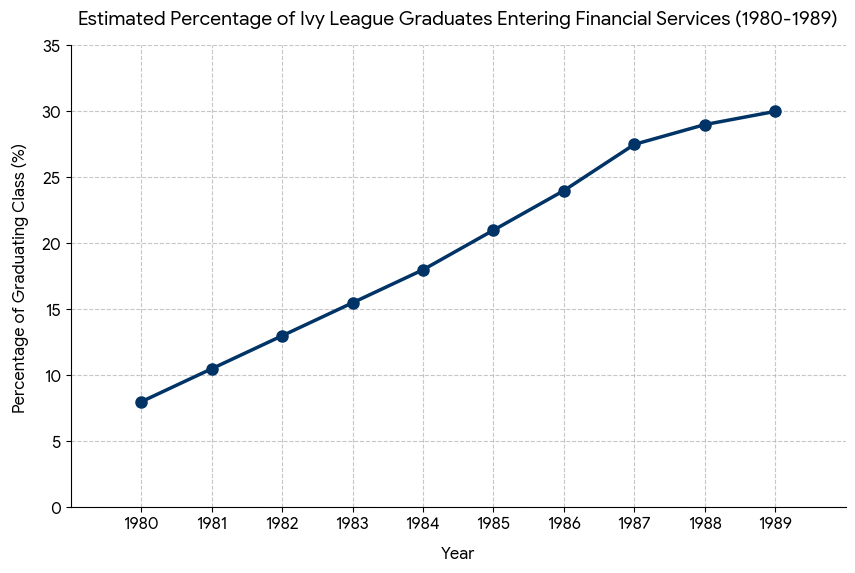
Special Boy College was a The City pipeline and the pseudo-meritocracy era played into it. Finance related fields were the biggest areas for graduate applications. I-banking and Wall Street only hired from a small clutch of schools and subjecting new hires to huge culls was the norm. One friend who did make a fortune described an intake group of 35, three of whom were still there a couple of years later. That was the base code deception. Fabulous Wall Street style life in The City as the pitch. Brutal rat race with insane costs of living for most.
I don’t know if that process survives any more. Not the SBC-Wall Street pipeline.

That obviously does. I mean the generic [everyone leave your town and “make it” in New York] cultural suicide.
With the average New York rent for a one bedroom coming in at over 4k/month, it may not. The Friends living arrangement was already absurd magic realism in the 90s. But whether or not some form continues, it did the damage to us that the beast needed it to.1
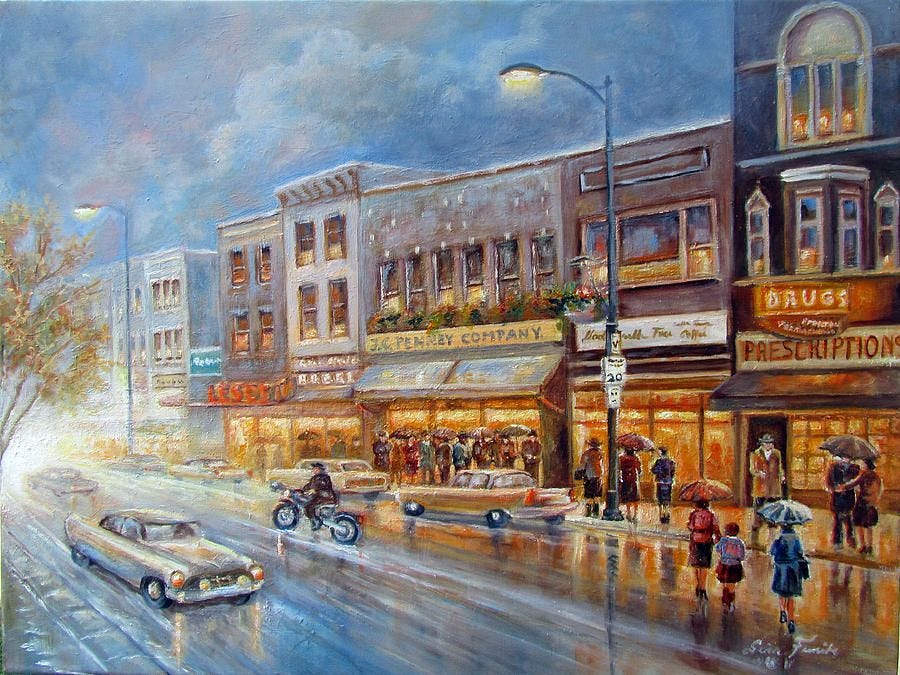
Before the wastelands of addiction and lost opportunity, the NUC did represent elements of organic community. It’s true that the microcultures were stifling, the local “elites” self-parodic minnows, and the lack of sophistication and social opportunity real. Because it was each community’s microculture, elite, and society. Four plus sigma outliers raised by resentful boomers to be dissatisfied with everything aren’t supposed to be the norm. Traditionally, outliers built their own sanity zones or left. What was new was the idea of leaving as aspirational for most everyone.
A few things followed.
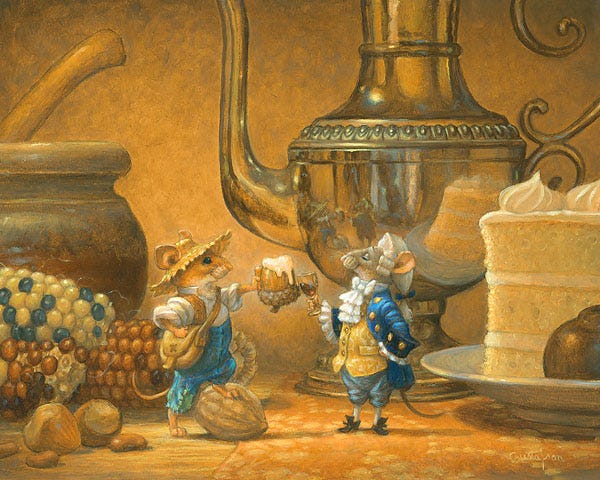
Scott Gustafson, The Country Mouse and the City Mouse, giclée print
City people always looked down on rural “bumpkins”, but now the rural folk internalized a sense of inferiority. The old town mouse / city mouse pattern was based on lifestyle incompatibility, not universalized hierarchy. I was raised with the imprinting that staying here meant I was a loser. My family boomers were more spiteful than most, but the difference was more degree than kind.
More significantly, the most capable and ambitious outmigrated at transformational levels. The people who would have been the ones to find and maintain solutions leaving, and those who couldn’t staying. There’s no way to confirm, but it hemorrhaged disproportionate numbers of FTS-1 while concentrating NPCs.
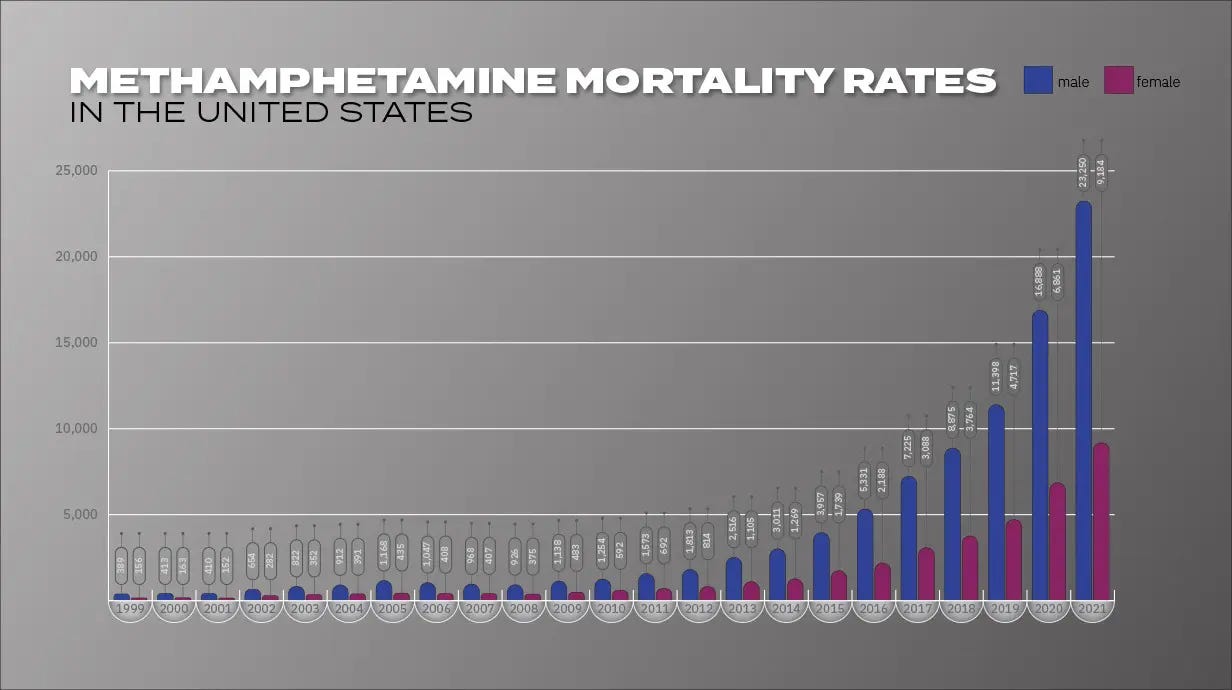
An inflow of drugs that didn’t even exist in our booze and weed Singles years with toxicity that seems like dystopic fiction. Can’t prove anything, but there’s no way these “epidemics” can exist in a mass surveillance era without official acceptance. We can speculate on reasons - anything from willful malevolent destructiveness to profit - but the underlying truth is obvious.
Running off the young means the average age skewed upwards, removing potential channels for improvement for useless boomer-and-up NPCs.
Paul Pujol, The Builders, 19th century, watercolor, Galerie Saint Martin
Thought experiment. What if the most talented, capable, and ambitious didn’t split for nonsense myths? What if high-status discover-a-way kids stayed and matured in local community? It’s a hypothetical, not a clear alternative history. Industry was still outsourced and the country still financialized. There are no sure [this happens instead] outcomes. But consider the above list of consequences. The thought experiment is a totally different equation. I can extrapolate to a degree from the potential in my own unlikely return.
My legacy project is NUC based. It’s the only environment that’s remotely collapse resistant with generational upside. Far enough from major urban areas, lacking in abundant resources of any kind to be a priority target, and, as a result, affordable enough to do something on a realistic budget. My polarizing impact remains - Bandlings are amused by how people are drawn to me for no apparent reason. And how ORR still works to build on it. It’s why the organic network part of the legacy project is a realistic shot.

Hiromi Sengoku, A Man Brushing up the Sky, 2021, oil on canvas
But staying realistic, me alone now has minimal impact compared to what my circle could have done had we all committed. Some modest, personal scale, developing organic connections. Brighter future possibilities for those in my orbit than existed for them before. But that’s the extent of it. Nothing on the community scale - at least not unless some seeds become trees whose shade I’ll never see. Just enough to make me wonder about socio-cultural roads not taken.
Anyhow, that was the make it in the city era. Some did. But the result was part of the atomization and cultural brownfields that replaced resilient organic society. Dissatisfied monoculture and historic dysfunction over actually diverse local cultures. It wasn’t the only factor. It may even have been as much symptom as driver. But it was significant. And more proof that NPC direction overrides self-interest on a mass scale.
Circling back to status and context. One of the great things about SSH profiles are the consistency. Basic make-up is basic make-up. But where you land in the larger social landscape - the doors that are open, the impact on the larger community, the resources at your disposal - are situational. The socio-economics of SBC made that obvious before 20. And looking at the NUC on the wrong side of 50 does too.
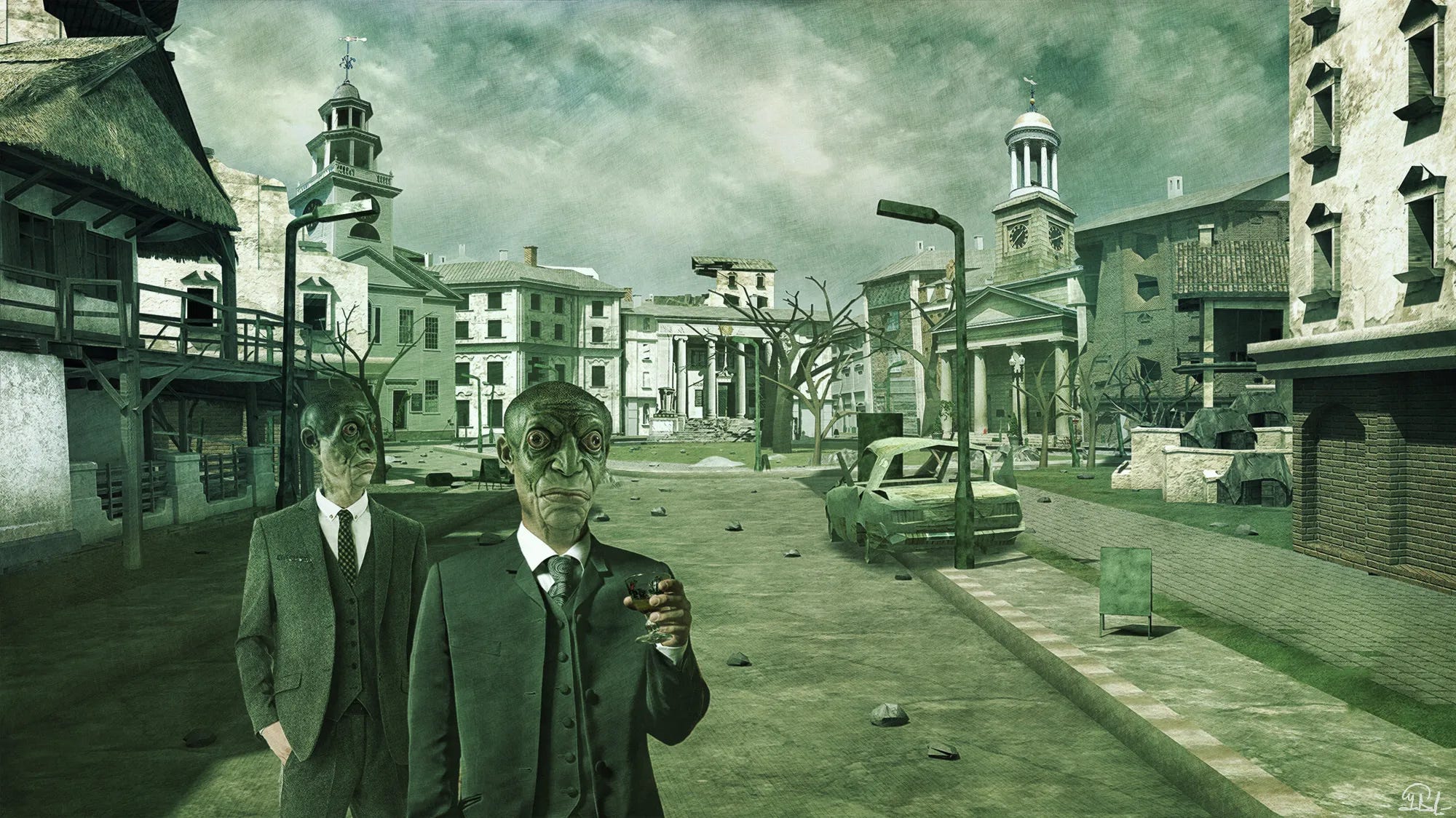
M. Crassus, The Shadow over Innsmouth, 2015, Lovecraftian digital art
What I remember as a minimally holistic society has become weird and dysgenic. Socio-economics largely divorced from any real productivity or innovation. Those who respond favorably to me overvalue the impact I can have. Those who don’t view me with suspicion or hostility for representing something “different”.
There’s no going back.
BFF-2 still lives nearby, his immense promise corroded by Gammatude and laziness into half-assed bitter regret. His lifeline bargain turned out to be rent boy for a hard 3. Last time we met up he couldn’t make eye contact.
Alpha is under state-mandated psychiatric care and wasn’t receiving the last time I checked. Figurative craziness crossing over into the literal.
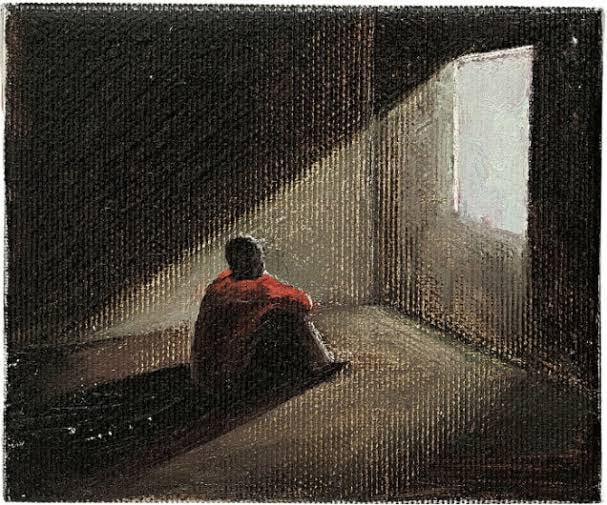
Code Omega went full recluse and answers neither phone nor email. Apparently he never recovered from my attempts to “bring him out of his shell” back in the day.
The family boomers aren’t speaking to me. Squandering resources being more important. That and beast media greatest ally Zionism.
Everyone else had been gone decades. The Slim Reaper, Alpha II, The Blues Traveler, Uncle Freaky, Julio, the Bantam Rooster, the lot of them. Making it in the city, or not. Reality facing means nostalgia is long buried. Rebuilding hasn’t been possible for a long while. My play - perhaps my last major act - is to drop the “re-” and just build. To generate something that can endure after [that which isn’t sustainable] doesn’t sustain.
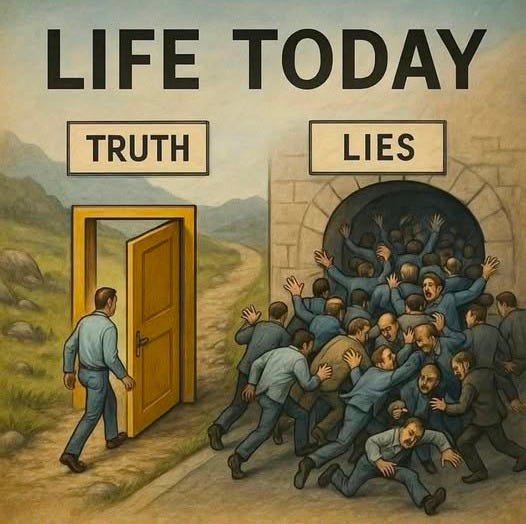
The lesson from all this is a basic one. In a House of Lies where the beast prioritizes chasing atomized communal destruction, do the opposite. But organic community and intergenerational cooperation aren’t defaults anymore. They require major attitude shifts from those doing the forming. Households that are screen-resistant are possible but take a lot of engagement. Work, to be blunt. If that’s “too hard”, I’d recommend looking at the socio-cultural arc over the last 40 years. Where it was and where it is. Then trace it forward. NPCs can’t, which is systemic tragedy.
If you can, there’s no excuse any more. Whatever the choice, own it.

I’m guessing the finance types are still pipelining. It’s likely the [every plucky young character on shows like Murder She Wrote burning to leave their bucolic small community] that’s been forced to downgrade. On the flipside, the Sex in the City ethos has disseminated.
There are pockets of the NUC that still resemble the 70s and 80s. I stumbled into one Thursday while on a motorcycle riding vacation in Colorado. Riding though Florence (pop 4,000 - 75% white) at lunchtime, I passed a city park with a large shelter and a weekly farmers market in the shade of the adjacent trees. After getting fuel, I decided to go back to the park eat my packed lunch and check out the 20-stall market.
I studied the people carefully. A mom with two under 5’s was packing up her stall. Shorts and t-shirt, with lovely smile, she was aware if where her kids were, and in no way hyperviligent. All age groups were represented in the vendors and customers. I spoke to several vendors who were all easygoing, and happy to engage with me. There were none of the Colorado archtypes like cyclists in skins, rich liberal basic bitches, or stoners. The relaxed vibe and lack of affectation or pretension was to me conspicuous. Refreshing, as well.
The most delightful observation was seeing kids liked up at the adjacent community swimming pool entrance. Holding their towels and shoes, full of anticipation to splash and scream in the water. The city’s noon alarm sounded (still a thing!) and they flowed into the entrance. They were experiencing the same thing in the same way I did as a child 50+ years ago.
I truly love small town America. I have my 45th HS reunion next month. I intend to ask some of my classmates the “what would we have done if we’d stay’d” question. I landed in the big regional city after college. Did not live up to my potential for the first 12 years, but turned things around in the following decades. I’m looking at moving to one of those nearby small towns in a few years.