
Bad Moon Falling


Alastair Magnaldo, Moonset, photograph
Time for a socialization-oral history post. Need a break from book prep. Sometimes an idea develops as something implicit becomes clear. A few posts ago, I revisited a youthful rivalry with an unfortunate character as a call to start kids on the right foot. That point stands, but there’s another that’s relevant for organic social outcomes. Competitive fire as powerful status builder with the potential downsides of any emotionalized state. Without it, it’s difficult to maximize performance - competition with self being part of the suite. But allowing it to cross over into false confidence and animus can have the opposite results.
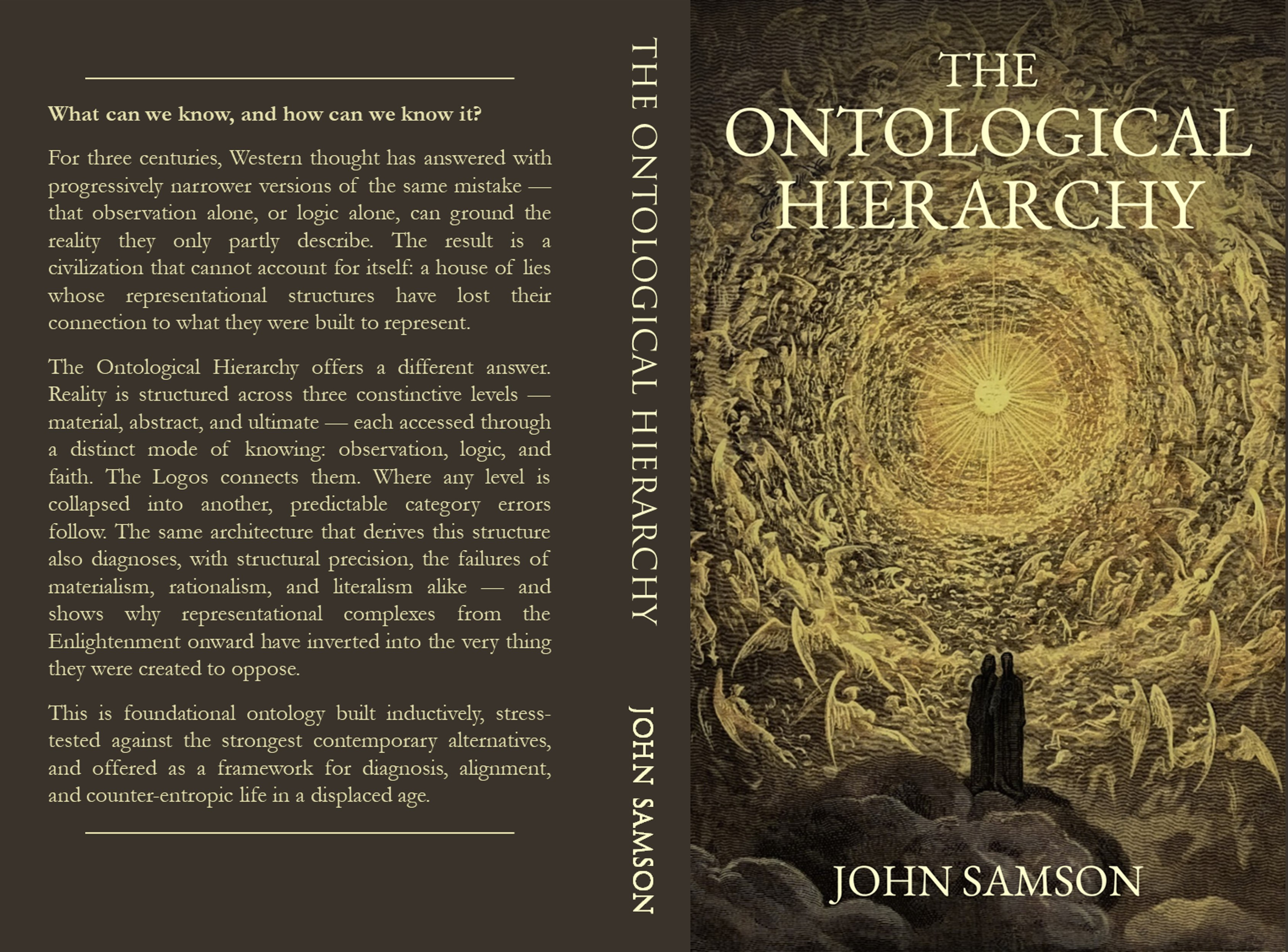
Quick note on The Ontological Hierarchy. Just finished the full cover design and am working on final edits. Part of the project is a proof of concept - how the AI tools mentioned in the last post are a force multiplier for individuals outside the beast system. This means doing the production myself, with machine editing help and Canva for the cover. The back blurb is the one I’m using, so this is also sort of a first preview. Writing it was vastly less tedious then going line by line and checking index pages and so forth.

Michael Young, 8 Ball Pool Room, 1994, acrylic on panel
The key, as with so many things, is combining self and situational awareness. Nothing wrong with taking on an overmatch, so long as a) you’re aware of the overmatch, and b) expectations are managed. The best 8-ball I ever played was taking 2 out of 7 games against the top-ranked guy in our pool hall. A thrashing by raw numbers, but the joy of competing at a level I could rarely hit. Each game over in a couple of turns. And vastly more satisfying than massaging the balls around the table in a lackluster win. But if I’d staked my ego on beating the shark outright, I’d be disappointed.
The point is bring it, but know where you are.

Hubert Spala, Cup of Bitterness Floweth Over, digital art
Circling back to poor Loots Mooner.

His issue with me was juvenile basketball stuff. I think it was connected to my being Alpha’s best friend, which made me “overrated”. Which somehow turned into it being my fault he got cut from varsity our last year. My pranks were reactive - the sum of [getting sick of unsolicited hostility] + [not taking him seriously]. When he blew up and lost it, I thought he wanted to fight and actually laughed. He’d hit his growth spurt, had become extra gangly, and still had clown hair. The growth spurt coordination was probably why he got cut. He wasn’t violent, though. His dramatic challenge turned out to be a one-on-one game.
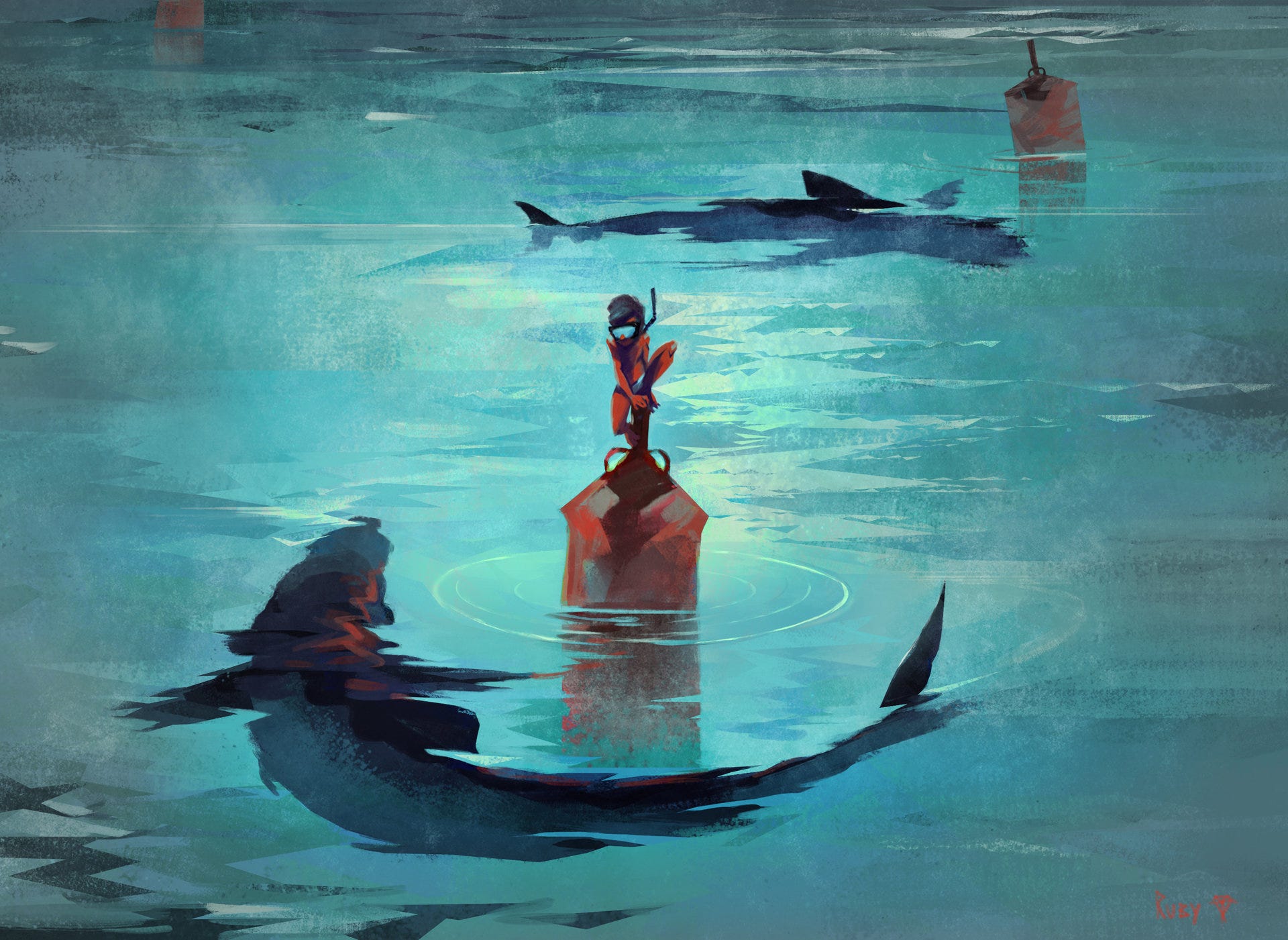
Aline Ruby, Bad Luck, 2014, digital art
This is where the Greek chorus would start ominously warming up.
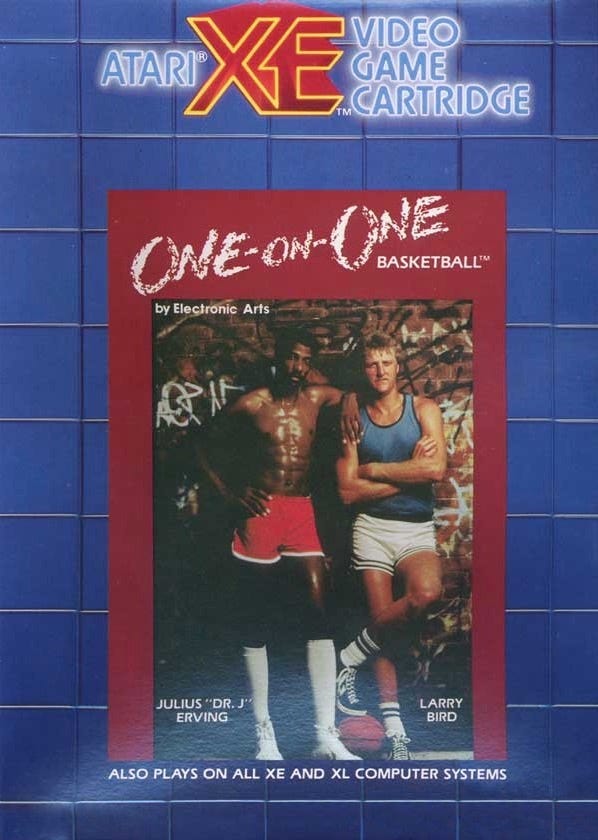
We played a lot of one-on-one back in the day. The solo nature of it elevated the pressure, but it didn’t prove much beyond who was better at one-on-one. Different game without passing, screening, and cutting. The benefit was the bragging rights. We played a ton of it. Usually to 11 by ones, win by 2, sometimes to 21 hanging with friends. Mooner wanted to go to 31 - a ridiculous total - to “settle it”. Apparently, my luck would even out over a long game.
Gym time solved itself. Normally, if there wasn’t practice or a game, the gym was free for pick-up until the school closed. That Friday, the social committee was setting up for a dance, so the gym was only free for about an hour before they started. We could change, have our private death match, and be out of there with time to spare. With one caveat. It wasn’t private.
Turned out to be the afternoon the girls’ JV team was hanging out on the gym stage, waiting for their bus to a game, with nothing to do. Normally, we waited outside in the loading area, but it was pouring rain. Of course we knew them all - they’re the basketball girls from mostly the year behind us. As Mooner’s brief false dawn of early success crumbled and then collapsed into a 20-point whooping, he started rubbing different body parts and whining loudly about hurting.
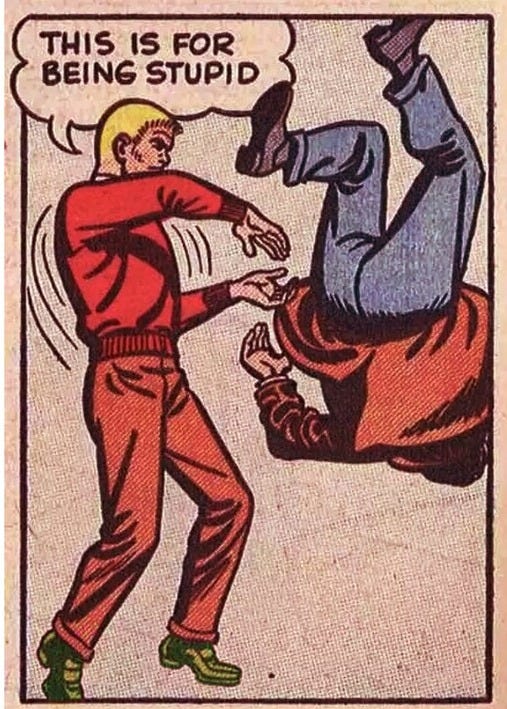
Here’s the hard socialization lesson. Time is long, and fruit-fly tier memory is fleeting. The whole point of lying and weaselling in a competitive situation is to protect the psyche from cognitive dissonance. So getting pantsed in front of a group of girls can fade into “I’d have owned Samson if my _____ hadn’t _____”. I recognized the social dynamics before Mooner did - I’m blogging about them decades later. No mercy after a public challenge. The line was something to the extent of “get your ass back over here and take your beating”. But less clean speech.
Cruel? No. Status formation. If you run your mouth, start something, and end up on the wrong end of a karmic shellacking, there are are only two honorable choices.
Concede openly and be spared.
Play it out and take what you’ve got coming.
I’ve always chosen the second. The third option is open cowardice. After Mooner got called out for faking, he didn’t even try the last few points, then stormed off to the locker room. We were the only guys in the gym, and I didn’t feel like getting changed with him at that moment. So I hung around and talked to the girls until the coast was clear. Smart enough to let them do the chattering and not say much. Because the dopamine wave was off the charts.
The thing is, we really didn’t talk about him. Just the usual filler - their upcoming game, social vapor, weekend plans, etc. Adolescent girls don’t really care who's better at one-on-one. Even basketball ones. Adult women don’t either. If they like you, they can get more invested in your wins and losses than you are. But that’s activity independent. It could be highland dancing or demolition derby just as easily. And if the attraction ends, so does the interest.
As an aside, lower-status guys often suffer from excitability. Being overly talkative in the wrong ways, to put it kindly. Attraction is an altered emotional state like the high after a dramatic win. I wasn’t chasing one of those girls in particular, but the context plus dopamine high were comparable. For younger readers, the altered state does settle down, and there are times she’ll want to hang on your words.
But you’ll know when those are.
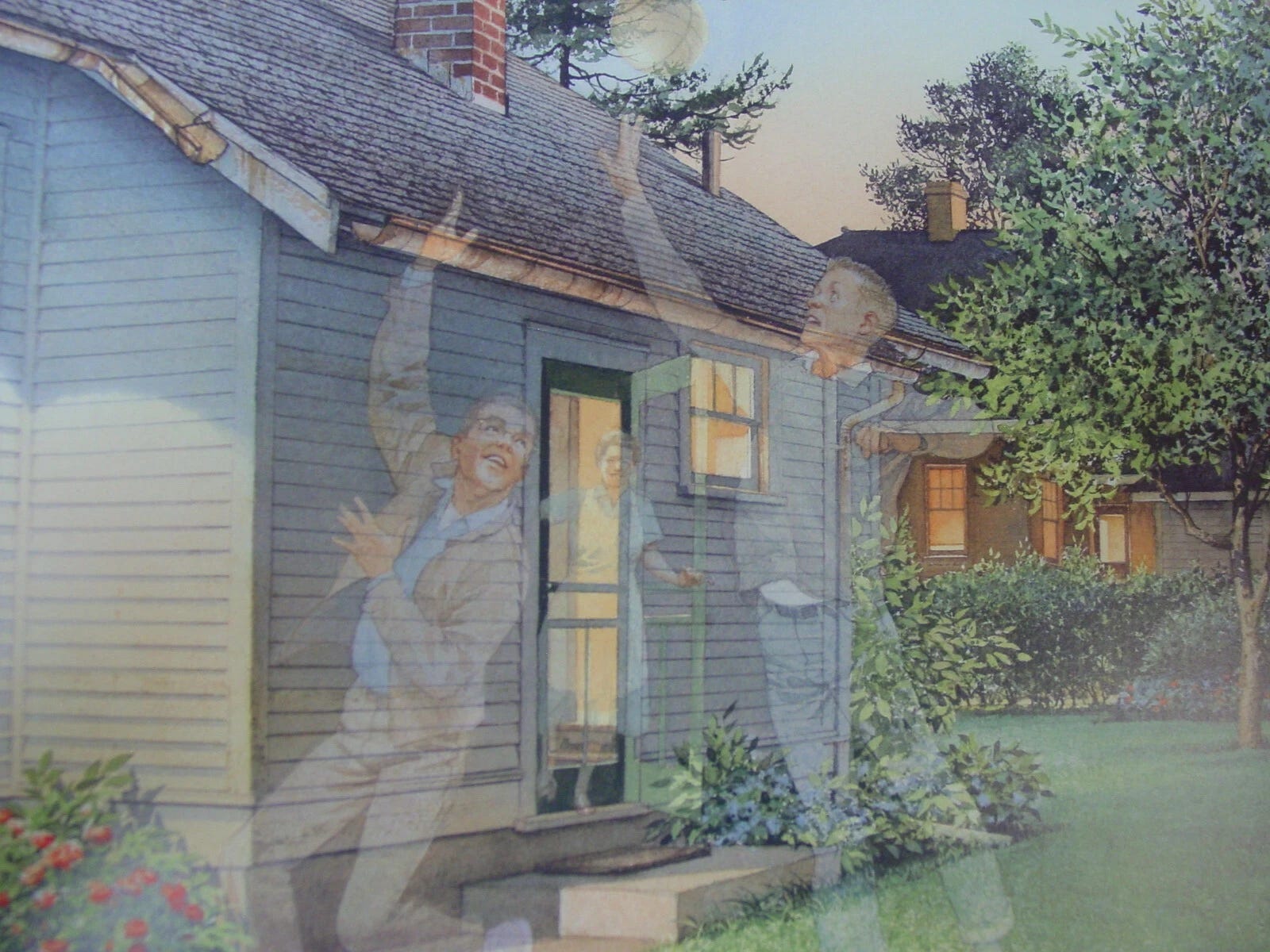
Charles Peterson, One On One, lithograph
Looking back, playing one-on-one was just something we did. Sometimes I won, sometimes I lost - never thought much of it. There were moments. Throwing down a tomahawk on Alpha on a slightly too-short hoop still stands out.1 That was the only time I was ever delivered a formal challenge that played out before a captive audience. And the insane part is that Mooner orchestrated the whole scenario. I would have been on my way home that afternoon if he hadn’t called me out in a way I couldn’t decline. Be careful what you wish for?
A few observations.
Be smart with challenges. At least entertain the possibility that the other guy is better than the chimera in your imagination.
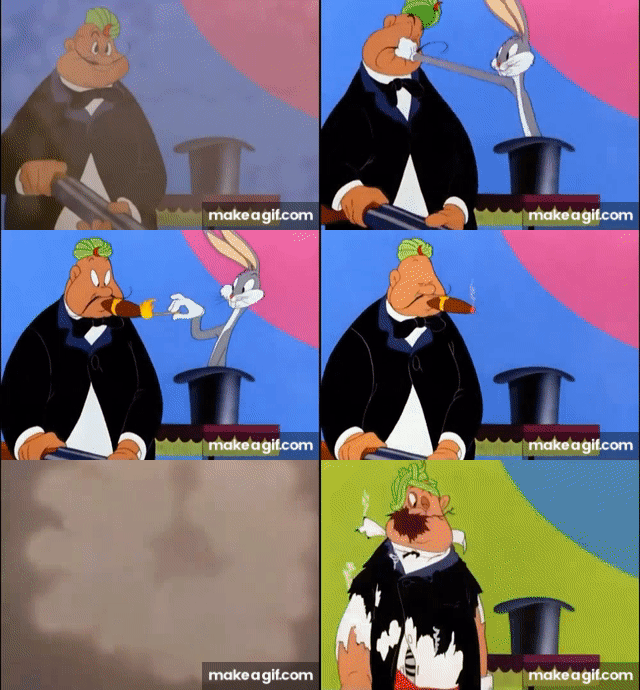
Self-awareness reveals patterns in our own behavior. If your cigars always explode, maybe don’t light one up in a delicate moment.
A developing psyche magnifies impact. A trivial thing in the overall scheme of things. But that much cortisol can’t be healthy. And enough dopamine that I remember it over 40 years later.
If you find yourself in a similar scenario, best to win.
The big picture is not to shy away from competition, but channel the competitive fury. Don’t let emotions master you and cloud your judgment. Because rising to the challenge connotes status, but every winner is paired with the opposite. There’s no “e” in quality.
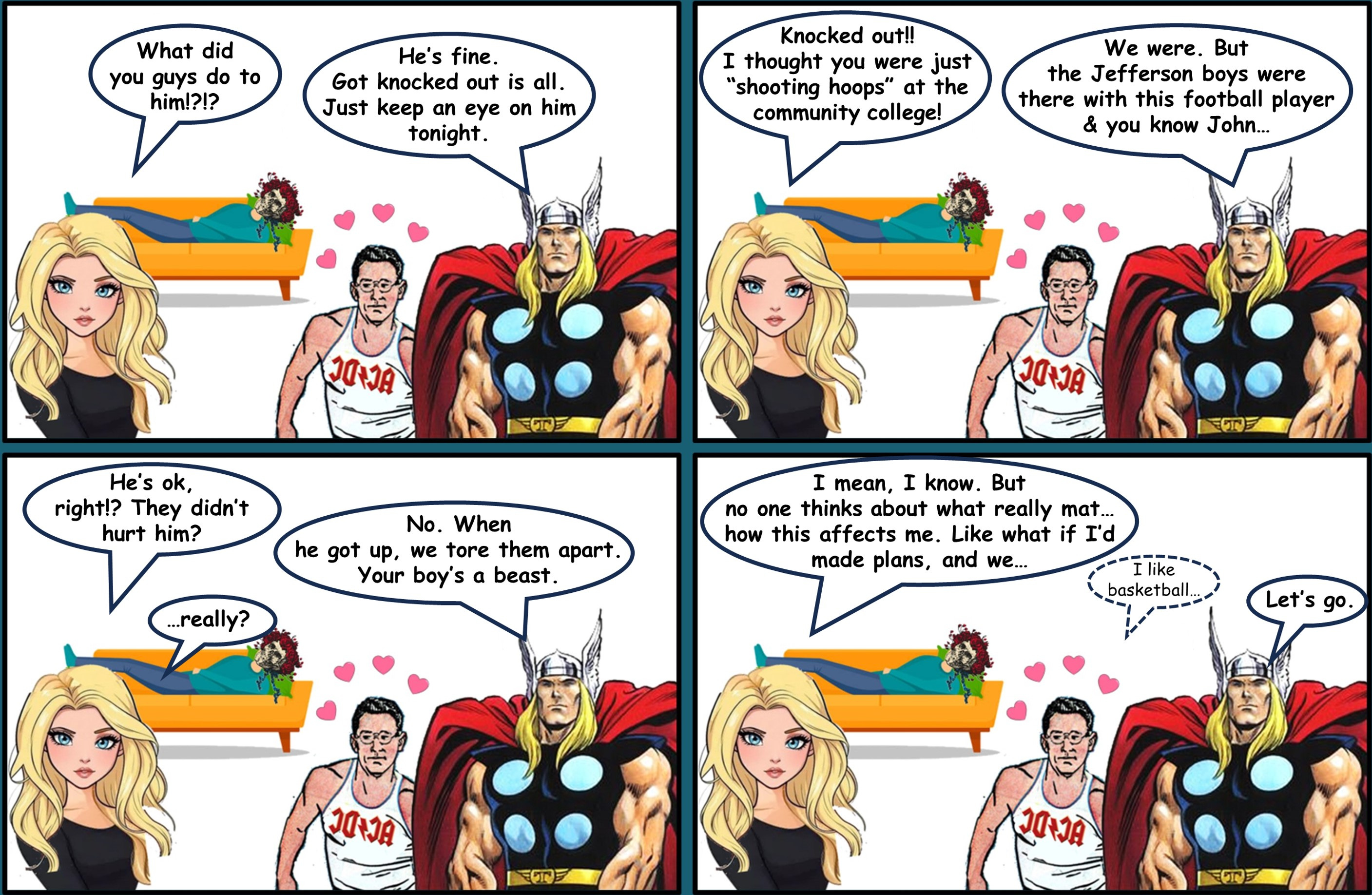
For parents, if you want to model a lesson for your kids, model resourceful tenacity. Getting caught up in headspace is a performance killer in any context. That’s what flow state is. It’s why sales runs in streaks. When it’s rolling, you’re unselfconscious. Desperation is the opposite. I wasn’t 31-10 or 31-11 or whatever it was, better than Mooner. The implosion was more mental than physical.
Probably why we had different paths.

I could dunk a volleyball, but could never quite get a regulation ball over the rim. 3” made all the difference. I have, however, been flushed on a few times.
The gamma's need to protect the delusion at all costs leads to so much unnecessary failure and pain. Watching it happen, or participating in it, goes from amusing to tedious to heartbreaking, depending on the relationship. I have a close family member like this. He once decided to challenge me to a running race, declaring that he would "smoke me", and ignoring the fact that I was the fastest sprinter on the track team back in the day. As soon as I pulled ahead of him, the "Ow! My trick kneeee!" started. He never challenged me in running again, but neither did he learn anything from it, other than Avoid-The-Trigger-That-Threatens-My-Delusion.
My aim with this family member is to always tell him the truth, however unpalatable. I love him enough to not lie to him, even if it hurts in the moment. Others mostly just cater to the delusion. He both hates me for it and seeks my approval constantly, once even begging me to tell the easy lie rather than be truthful. It is truly awful.