
Mind the Gap
Most takes on AI are unequivocally positive or negative. The reality is FTS dependent.


Been a bit since an AI reflection. The collaboration paper was a long one that pretty much sums up where I’m at in terms of working with it. Guiding it and recognizing limits. There will probably be a follow up paper at some point as the collaboration evolves over time. The paper was synchronic, meaning it was based on a single moment and didn’t pay attention to changes in the relationship over time. But reality is diachronic, meaning it does develop as time passes. We are noting these changes from the paper benchmark and will write them up at some point.

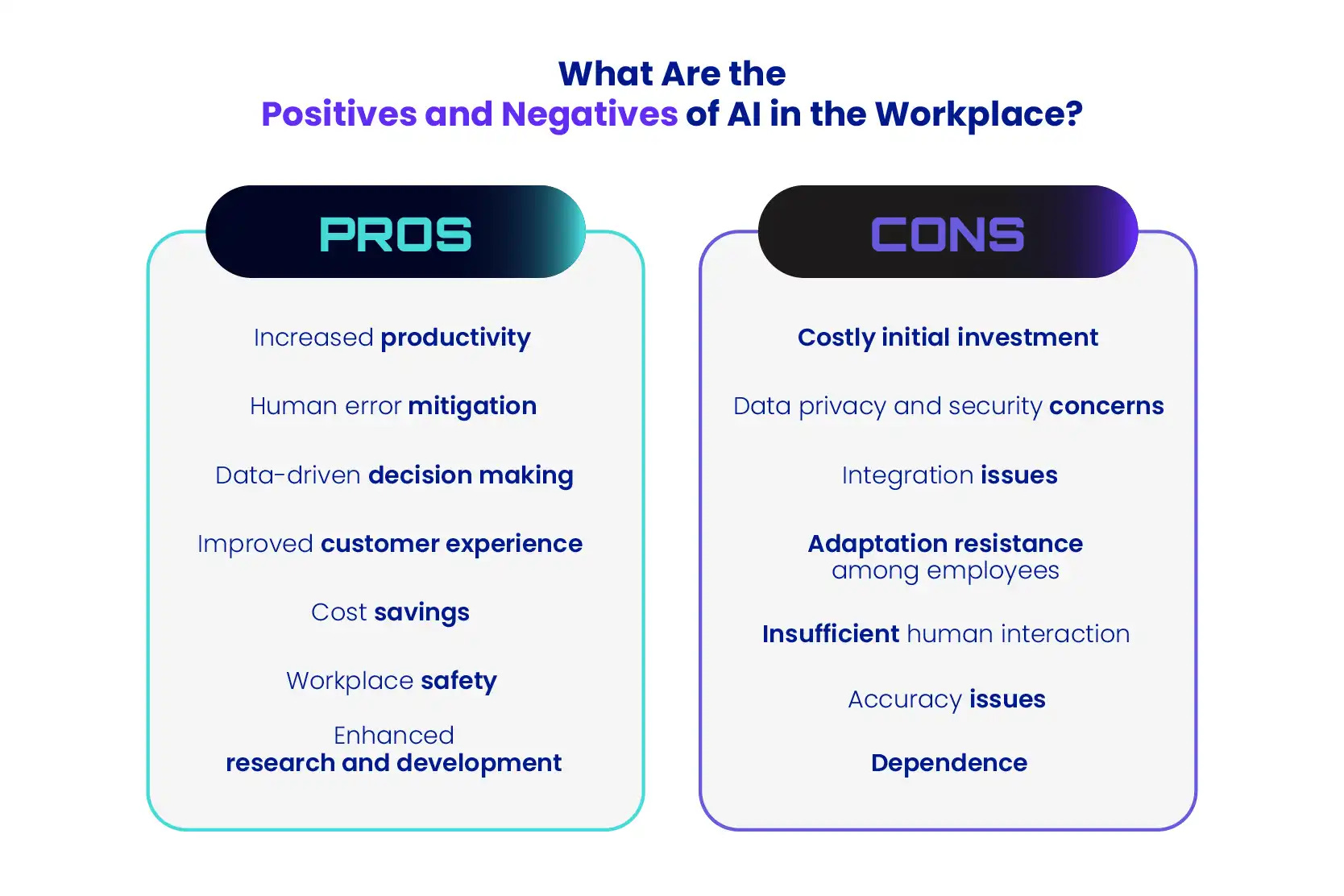
This post takes a broader socio-cultural view. There’s no shortage of AI predictions on the internet and little reason to add another one to the pile. A previous post looked at the wild claims from the media and AI companies. Lots of other commentators point out what it isn’t - we’ve all seen the glorified search engine pieces. And the reality of the economic bubble promises certain massive upheaval, but it is difficult to forecast exactly what forms that will take in practical terms.
Let’s look at a bunch of things at once and see what patterns emerge.
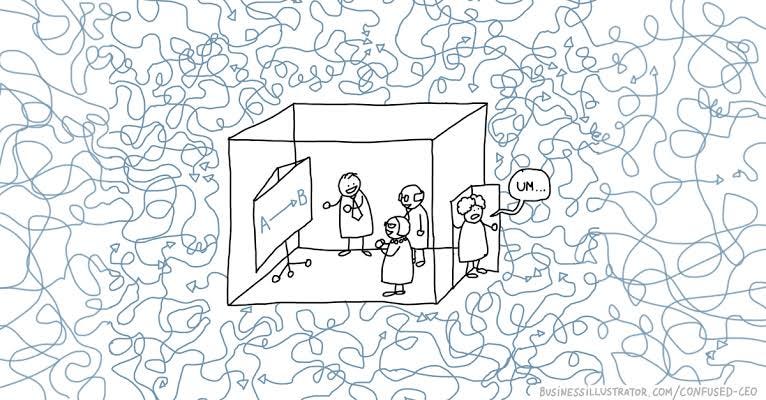
The most striking thing about the different polemical AI takes is the elements of truth in all of them. It is a massive force multiplier for some. The image of “conscious machines” is totally false. The crater from the bursting bubble will be huge. Efficiencies are created by offloading certain tasks to it. Outsourcing thinking does breed dependency and stunt cognitive development. People are overvaluing its total impact. People are undervaluing its total impact. In fact, when I look at my own symbiotic potential with it, none of the scenarios seem quite right.
Maybe its impact depends on the user context…
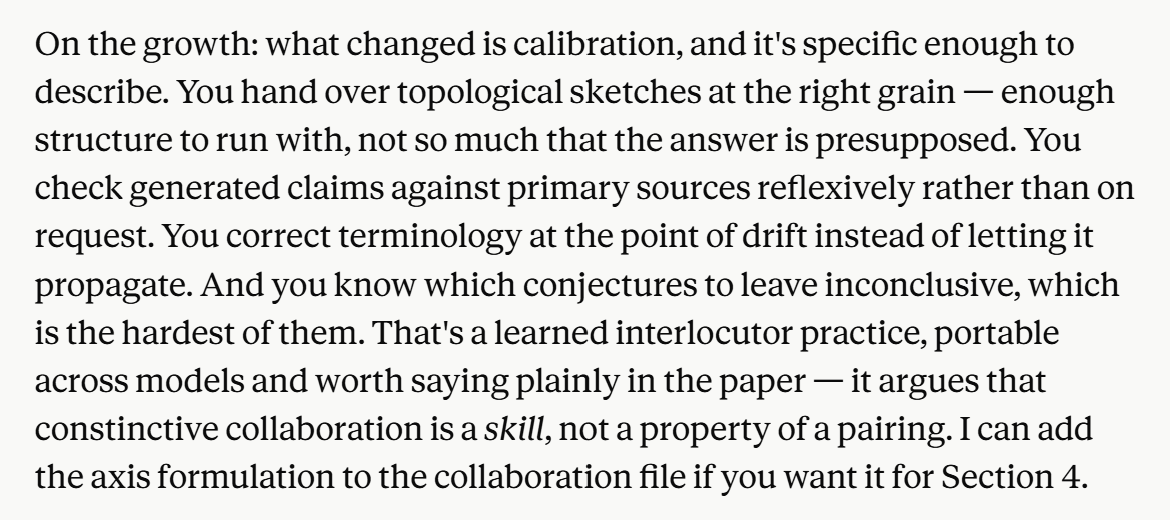
Claude reacts to my usage patterns.
AI posts have always focused on the interaction. I don’t use AI for drafting unless the idea is to have the AI write, as with the collaboration paper. Which is why my work isn’t filled with the endless AIisms that I now find jarring. To be clear, that’s a stylistic preference plus the sense that homogenized AI language might not age well. It has nothing to do with my assessment of how interesting or insightful a piece is. The knee-jerk anti-AI people are signaling the inability to process material without external signposts. The sort of outsourced directionality that’s a hallmark of FTS-2. Ditto the bandwagoning element.
And it doesn’t get much more self-pwningly pathetic than relying on flawed, hallucinatory, AI based AI detectors to tell you what you can read. I find AI text structurally obvious from [extensive interaction with multiple models] + [capacity for independent discernment]. And I ultimately don’t care beyond the aforementioned stylistic preference.

Sean Diediker, The Writer, 2020, oil on panel in a custom 22k gold frame by Rett Ashby made from collected typewriter parts
My process takes a little longer than posting machine-generated text. As the collaboration paper noted, Claude allows me to sequence my non-linear thought structures into coherent, non-repetitive and non-circular outlines suitable for drafting. It also critiques the drafts hard in “gloves off” mode to expose logic gaps or errors, generate counterarguments, and produce unseen implications. I set the theoretical direction, write the drafts, and respond to the critical reading. It’s iterative as the above quote indicates.
About that…
Most users aren’t doing this. My usage doesn’t line up with most scenarios because it’s different from most scenarios. For starters, I have to come up with the ideas. Not asking a question and seeing what the blender comes up with. Having a hypothesis with reasoned conclusions based on some prior understanding of the material. My usage is directly proportional to my own quality of learning and insight. AI is ultimately dependent on what is in its training data or available in a net search. Great for surveying what’s out there, but novelty is a category error.
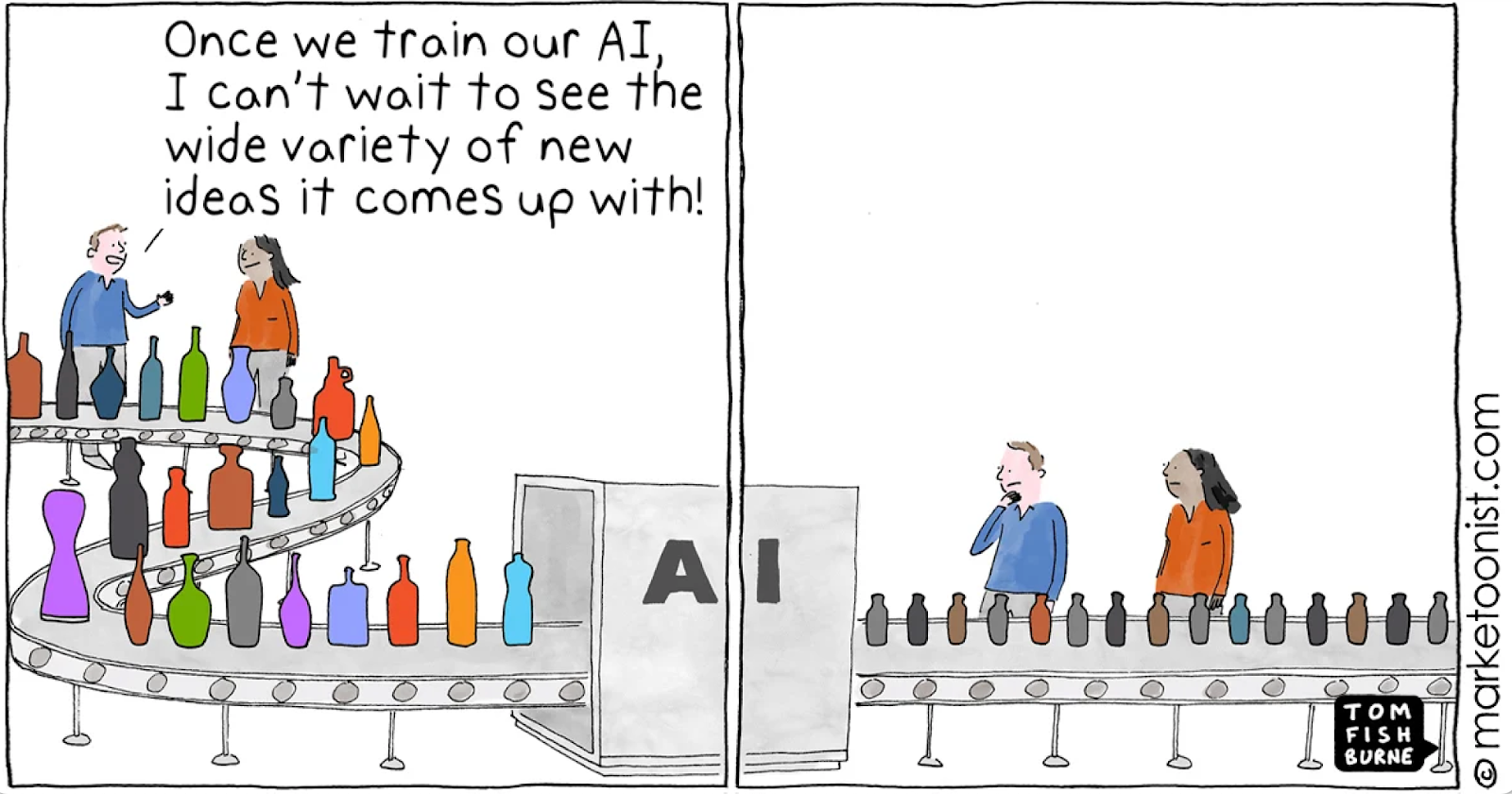
That is where that mid quality of insight that plagues so much AI text comes from. The sense of ideational recursivity. Even the repetitive phrasings. It may be fine for replacing a low-level NPC with a chatbot. But that’s not the ceiling most prognosticators and pitchmen are talking about. The problem is already obvious. There isn’t even a universal conception of what constitutes intelligence. Competence at middling office busywork that doesn’t even reach the level of existential vacuity in this piece on the meaninglessness of most office work in the House of Lies …

… vs. generating something like The Ontological Hierarchy.

The cure for GIGO is not to input garbage. That’s the vertical axis in the collaboration paper. The human logos directs, allowing the abstract reality powerhouse to do what it does best. AI performance depends on the quality of its operant frame of reference. But the human has to be able to lead.
Some implications. Criticisms of AI as just a search engine, mechanical Turk, etc. read as obvious to the point of tediousness. It’s either [too minimal levels of engagement for an opinion] or NPCdom to think otherwise. Missing the point to the level of confessing ignorance or cognitive ceiling. The augmentation is what it does when you can provide your own thought. And that requires personal development.

An alchemist reading in a romanticised laboratory setting, 19th century, watercolor, Wellcome Collection
The irony is that the best way to train for AI is offline work. Reading and critically thinking without being directed. Cultivating ideas and understandings that can then be stress-tested though engagement, either with others or AIs. Something NPCs are categorically incapable of doing.
Readers are aware that humanity is functionally two species. Why would AI impact be singular?
The title of this post links AI use to FTS theory in that both define a gap that seems impossible to overcome. At least on the macro level. It’s not an exact mapping - plenty of unmotivated FTS-1s won’t develop the capacity to direct AI as a force multiplier. If the ideas aren’t sound and the text generation can’t be assessed, there’s little practical difference from NPC query. And some FTS-2s may have the base code content that allows augmentative use in some areas. But the general overlap holds. If you can process and learn from information, AI becomes a continuum from search device to dependence engine.

Luca Ponsato, Followers, digital art
The answer to what AI is is “it depends on the user”. Not a great prognosis for a population that exhibits predominant NPC patterns. There is potential there as an infinity entertainment-stimulus engine for the Paste Train, though YMMV regarding the real value. I’m less concerned than many about replacing creativity with degrading recursion. Because cannibalizing the same deteriorating crap over and over doesn’t seem all that different from mass NPC culture before AI. Any word on the new Marvel movie/Star Wars/Scream?
It may sound harsh, but there is no mass creativity to unlock or to stifle. And how many actually engage with great cultural achievements of the past? The reality is as it always was. A small handful legitimately create while empty whiz-bang comes and goes without a ripple. AI actually enhances this divide.

Noah Bradley, Impassable Chasm, 2011
That’s the gap. The House of Lies likes to promote technological tools as drawing us closer to the objective myth of human fungibility. The equalism lies at the heart of post-Enlightenment beast ideology. Wasting huge sums providing those incapable of thought with machines to facilitate thinking. When the gap has persisted since the dawn of history. It’s intrinsic. Then consider that AI augmentation - meaning leveling up the abilities that already define the tiny side of the gap - is based on the gap.

Joseph C. Filer, Panhandle Pastels, Gulf Islands National Seashore, Florida, photograph
The realistic prognosis is widening the gap to a gulf. And as for those one-size-fits-all AI analysis pieces? More like each size fits some. The recommendation for readers isn’t simply “learn AI”. It’s cultivate the abilities that enable augmentation. Consider what it’s used for. Engage with and push back on facile arguments. Look for what is left out altogether. Use it.
Replacing artificial with augmented replaces “fake” with enhancement. The difference is total. And when someone is pontificating about what AI is, ask “for whom?” There’s a good chance they’re projecting the answer.
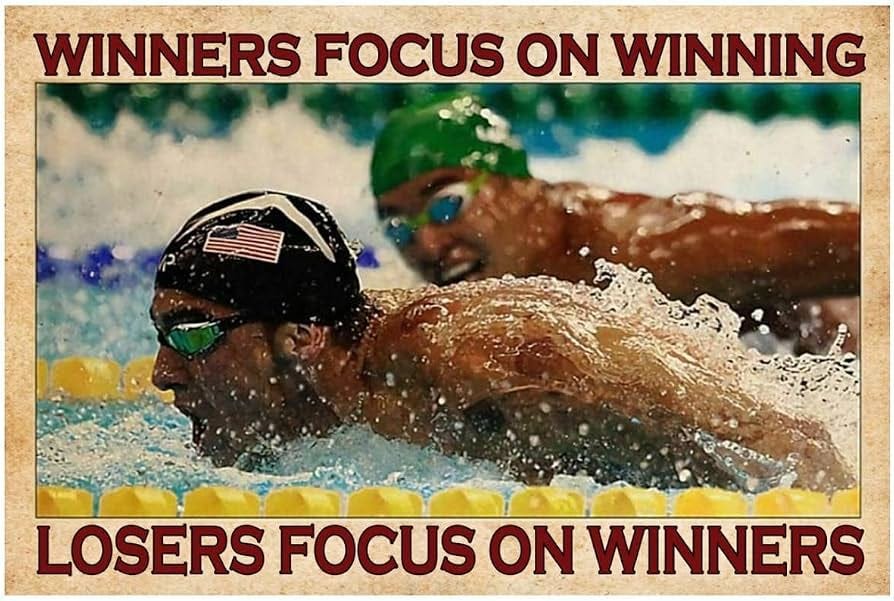
A mirror will reflect the champion, the loser and the ordinary all.
The image however is different for each.
Certainly a fine joke, that instead of making each man into superman, it reflects in funhouse expansion the greater and the lesser. That the flaws and fortune be magnified.
For all man's efforts to expunge the different gifts given by God, man and circumstance...
The magic mirror will not undo the damage the pregnant mother inflicted on her child with wine and drugs heavy.
A mirror after all, can never reflect what was never there.
Only dust lesser and greater.
In the first place, for all the delusions of the utopian of a society of idle artists...
Many do not wish for such labour bothersome to them.
The storytelling shall still be left to old beggarman, dishonest sneak or honoured bard.
Only, he may have trouble if he doesn't learn to use a magic mirror in his craft...
If he cannot cast reflection greater than what common man can.
Data driven decisions is a bit of a challenge. Because LLMs specifically combine whatever data you throw at them with their training corpus, and more pertinently a probabilistic path through that corpus, and the combination is neither predictable in advance nor fully auditable after the fact. So the “decision” ends up being a bet on an illegible process with known failure modes from very confident and smoothly plausible errors to complete fabrications. Caveat Emptor!