
Partial Knowledge
Continuing with Vox Day's refutation of the Enlightenment's epistemological foundation.

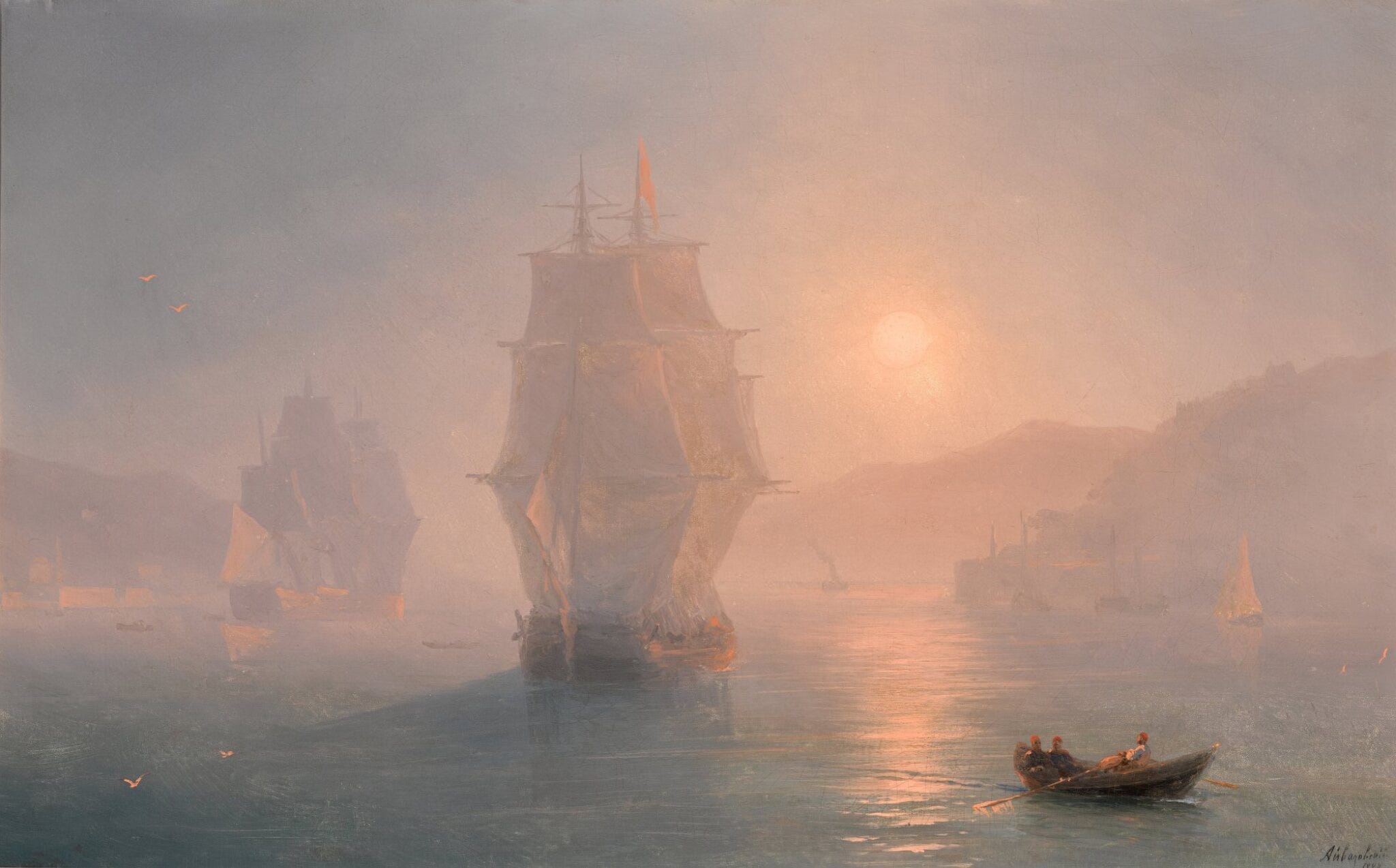
Ivan Konstantinovich Aivazovsky, Ships on a Misty Morning, 1888, oil on canvas
Time for another installment in the Band’s look at Vox Day’s refutation of Kant. There are good reasons to break it up and not just because there’s much more to say than a regular post’s length. Stretching out a reaction or review is atypical - usually the idea is to respond when something is fresh then move on. Philosophical subjects are different though. We’re taking ideas that are literally centuries old and permeated through every corner of the House of Lies before it was even a Floorplan of Lies.
As before, we are looking at this through the logical map of reality laid out in The Ontological Hierarchy. The last post laid out the basic premise of the book and positioned this Substack’s approach. Sort of an extended introduction. This post will get into some of the arguments and how they build what I think is a conclusive case.

Readers who aren’t used to philosophy may be new to slower reflective reading. I technically speed read and take my time with this sort of stuff. The ideas don’t crystalize in all their implications right away, even for an outlier. Sometimes they never do until someone points something out. This isn’t an advisement to tune out. This particular material is really interesting with serious implications. Breaking it up makes that a lot clearer.

Dai Nguyen, The Scholar, 2020, digital concept art
As always, readers are encouraged to look into the book themselves if interested in a deeper take than the one here. That said, I have read it carefully and despise the “so what you’re actually saying” game liars and idiots like to play. If only superficially interested, this is an honest presentation.
Day’s argument has two main thrusts. The first was covered in the last post. It leans heavily on Kant’s obsession with something called reality “in itself”. The fabric or stuff of reality that we know through our perceptions or conceptualizations. This is fundamentally important to the whole Kantian project, though irrelevant in any practical terms. Break it down.
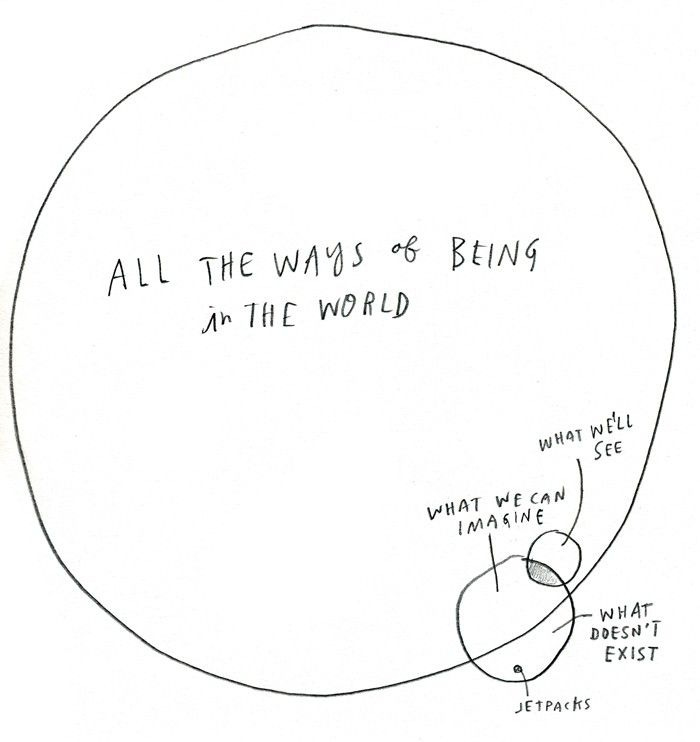
Reality in itself is one of those philosophical characterizations that has no real impact on how our - here’s another philosophical term - being-in-the-world works. Look closely at that last term. It’s translated from German - hence the hyphenated compound word. But it means what it says. Being as the state of our existing as contained within the world. We exist in the world around us. Something I assume most would consider obvious. Our understanding and experience of the world is an interaction - our faculties, its nature.
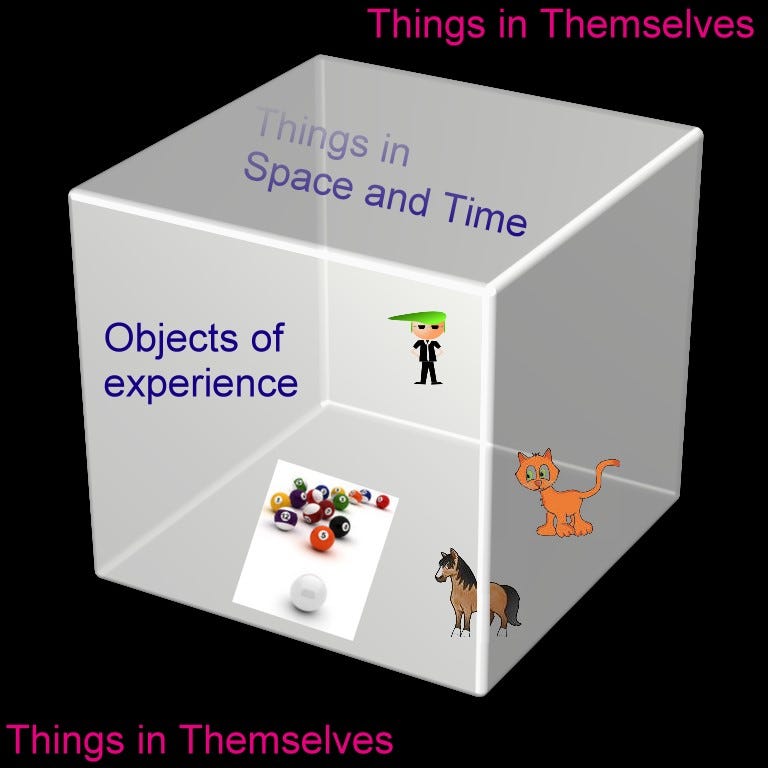
Reality in itself refers to the world beyond our observation and reason. Our apprehension as the OH calls it. For example, the wall I avoid walking into when I choose the door is known to me as a perception. It looks like something. Specifically [the wall]. I also have some thoughts about it. But my thoughts and the mental picture transmitted to my brain are not the same thing as the wall. They’re representations. RII would be whatever [the actual wall] is that my perceptions and ideations represent.
The logical question is who cares? We are embodied creatures with perceptions and thoughts intrinsically shaped by our embodiment. How we are made or structured. We can build jet cars, skyscrapers, and AI with our structured thoughts and perceptions. I don’t need the word “pepper” to contain the true essence of the spice for you to pass the correct shaker at dinner.

David Spriggs, Dark Matter, 2007, black paint on layered transparencies, display case, Musée national des beaux-arts du Québec
What Kant did was declare this difference to be ontologically fundamental. Meaning it parameterizes the nature of reality. Things-in-themselves became the noumenal realm while our apprehensions became the phenomenal realm. The fact that the noumenal was the source of the phenomenal was handwaved away because … Enlightenment. Not being flippant. The Enlightenment was a reaction to earlier systems of authority, a reaction that pretended human reason was the absolute standard of truth. If we can’t apprehend it, then it - for all intents and purposes - doesn’t matter. The phenomenal became effective “reality” and the noumenal was banished from consideration.
It doesn’t matter where it starts. It just is!
Seriously. Kant’s inability to account for the connection between the two should have smothered his project at inception. But one thing I’ve noticed is that materialist liars have an incredible capacity to ignore basic problems with the origins or foundations of their facile “theorizings”. So long as the theorizings let them deny the existence of God. It’s not hyperbole to characterize the whole Enlightenment aftermath as ignoring logical necessity to posture as atheists.
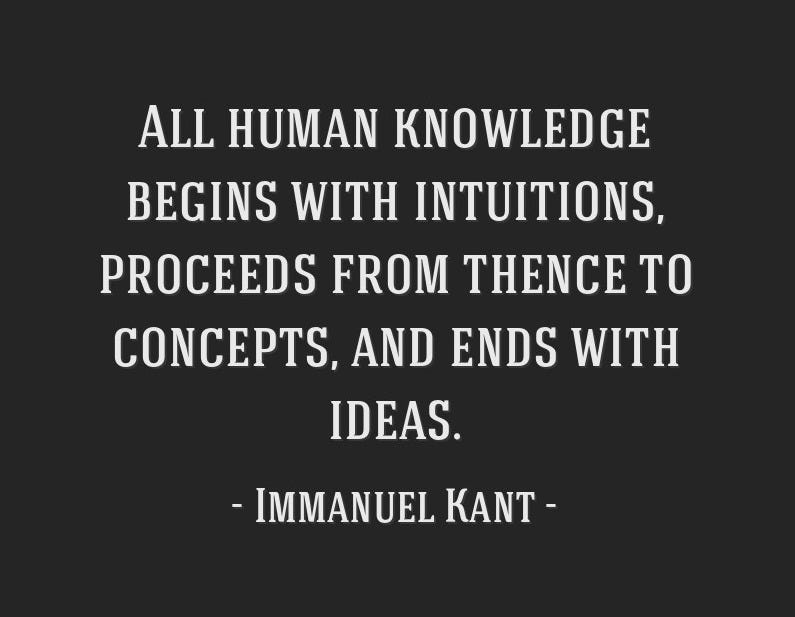
For Kant, intuition is basically raw perception - immediate, sensible representation through which our mind relates directly to an object. Conceptualization refers to active thought via understanding. Processed intuition. Empirical and logical epistemologies in OH terms, if origins didn’t have to be accounted for. But origins do have to be accounted for in any coherent ontology. And confessions of limited apprehension are irrelevant to the reality of what isn’t apprehensible.
Day effectively blows this apart with the should-be-obvious observation that imperfect knowledge is still knowledge.

Anyone who can think at all recognizes human limits. Kant wasn’t wrong in noting human cognition is structured. The Band calls it representational filtering by finite, fallen subjects. Day calls it mediated realism. But unknowable at all is a false conclusion. The question is whether we can know imperfectly what we cannot apprehend directly.
The simple logical necessity of an ontological ground or “origin” indicates we can.
Put succinctly:
Subject dependent != subject imposed.
Nevertheless, the Kantian divide between noumenal and phenomenal proved foundational for the post-Enlightenment beast system. With a few beast talons that the book explains.
If the phenomenal realm is all that’s knowable, “science” becomes the only valid knowledge source. Anything outside the mechanized view of observable, logical apprehension is “noumenal”. Not knowable. Epistemological constipation follows. Efficient causation in Aristotle’s terms - the process that explains something physically - is the only thing that can be sound knowledge. Despite it not being fundamental reality by Kant’s own ontology.
Day explains how his limited perspective created a host of artificial puzzlers, like splitting “facts” and “values”. Anything that can’t be mapped via efficient causes isn’t “knowledge” and therefore relegated to the subjective. The whole beast nonsense tower of moral relativism and “your truth” follows.
Another is consciousness, which is only a “hard” problem if knowledge = mechanism. We can describe it structurally and investigate it logically and empirically. My hypothesis in The Ontological Hierarchy is that it originates in ultimate reality and therefore has roots that aren’t apprehensible. [Knowledge, but not completable knowledge] really isn’t hard. Is my hypothesis true? Don’t know, but Kantian misconceptions rule out even posing the question.
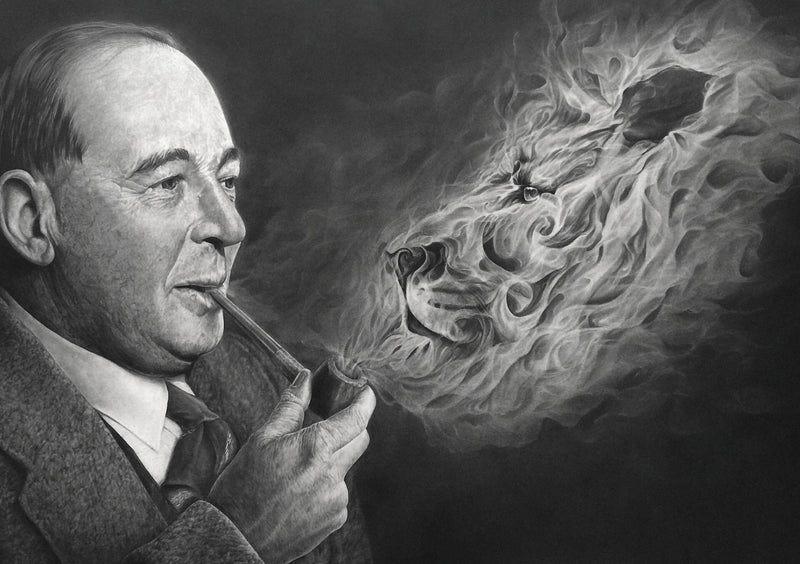
Jake Weidmann, C.S. Lewis and the Untamed Lion, 2021, print
Interestingly, C. S. Lewis saw the problem a long time ago. He just presented it in a conversational manner to an audience he assumed was much smarter and more FTS-1 than it proved to be. From Miracles:
Since the century when Science was born, the minds of men have been increasingly turned outward, to know Nature and to master her. They have been increasingly engaged in those specialized inquiries for which truncated thought is the correct method…
“Truncated thought” completely captures what Day shows to be the Kantian aftermath.
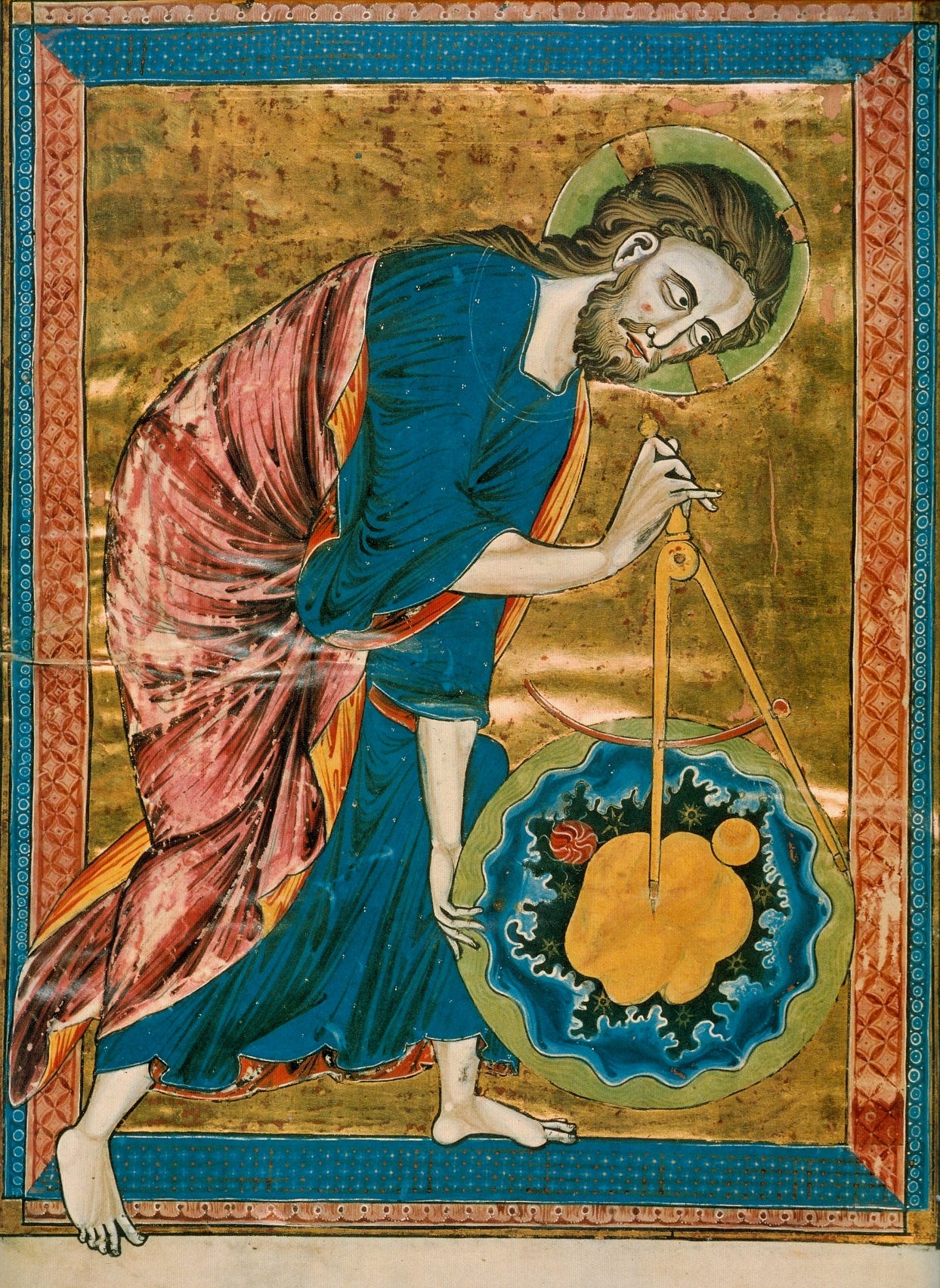
God as Architect/Builder/Geometer/Craftsman, The Frontispiece of Bible Moralisee, Codex Vindobonensis 2554, f.1 verso, circa 1220-1230, illumination on parchment, Austrian National Library.
The compass in medieval art symbolizes God’s act of Creation. It’s a sign of the fundamental geometric and harmonic principles of the natural order. Seeking these principles sought and worshiped God - the ultimate ground beyond direct apprehension that our limited “phenomenal” apprehensible reality descends from. The full unified ontological hierarchy.
Lewis continues, observing the loss of metaphysically awareness that accompanied the rise of “science”. And the consequences for ordinary people forced to figure out reality on their own. Like The Ontological Hierarchy.
In the conditions produced by a century or so of Naturalism, plain men are expected to bear burdens which plain men were never expected to bear before. We must get the truth for ourselves or go without it. But a society where the mass is still simple and the seers are no longer attended to can achieve only superficiality, baseness, ugliness, and in the end extinction.
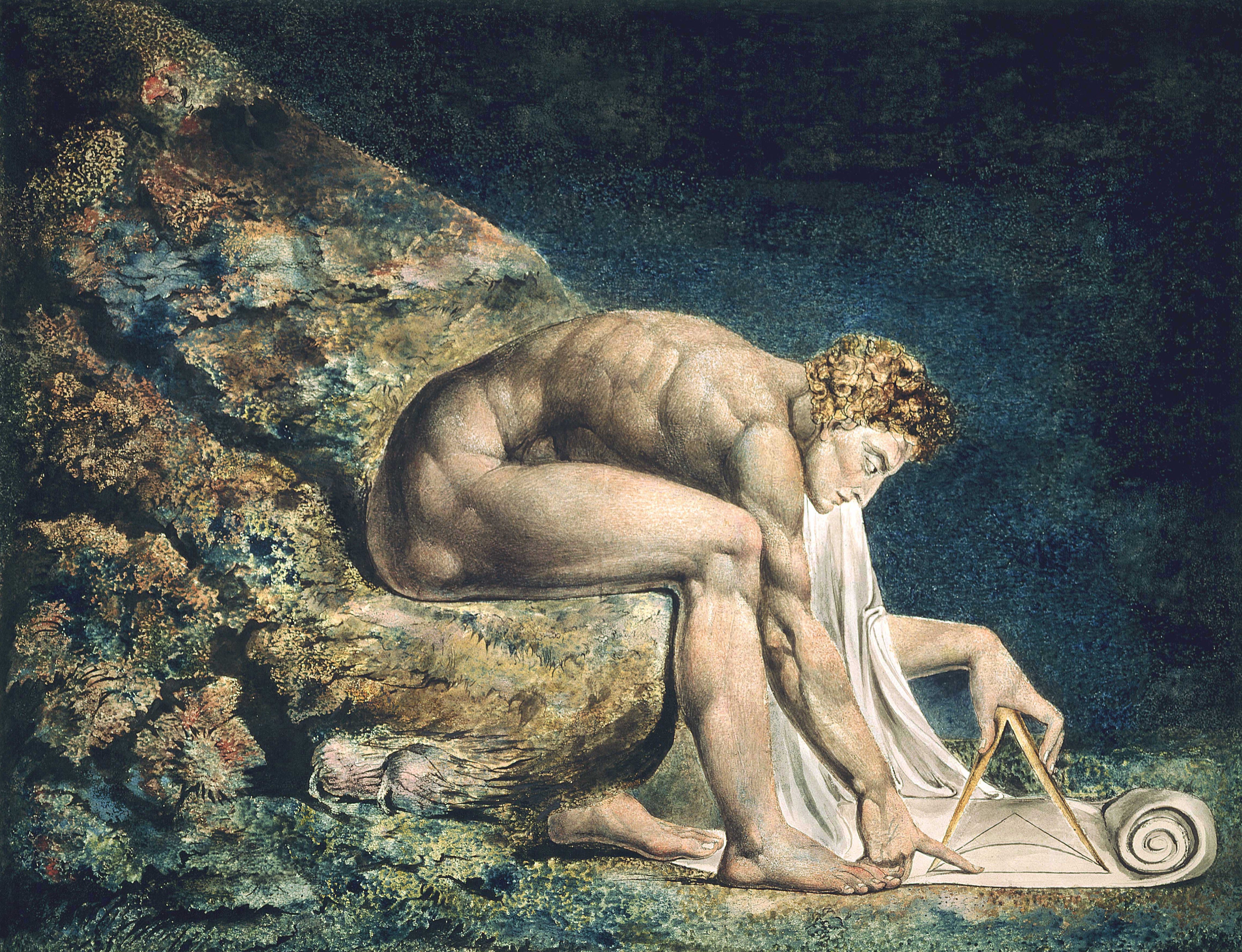
William Blake, Newton, 1795–1805, monotype print, Tate Britain. Blake captures the post-Kantian difference. Myopic human apprehension fixated on a narrow sliver, while the fullness of reality is unrecognized and ignored.
Lewis is more optimistic than I am about the possibility of going back to a more reality-facing time. Day makes the point that the tradition already failed to prevent the dominance of truncated mechanistic thought. His call is for a new epistemological frame, one rooted in a fuller connection to actual truth. He calls it veriphysics, and in the last post on this theme, I'll use the Ontological Hierarchy to explain why it faces reality in a way previous approaches did not.
For now, Lewis’ point is that this truncated, mechanistic world view is a new development. Day shows that the foundation is a fundamental error in its most influential cornerstone.
That’s long enough for now. The next posts will take up two major themes. The mathematical half of the critique that’s conceptually newer to readers. And why the trilateral nature of veriphysics makes it an effective measure of truth in a reality where ultimate foundations escape direct apprehension.
You probably have a to-be-read-someday book stack like mine, but can Ii recommend the works of Craig Shelton, Yale neurochemist, award winning chef, and philosopher-king? Also, he's a hell of a nice guy and wicked smart.
https://craigcshelton.substack.com/
"Craig C. Shelton is a philosopher, institutional architect, and author of Integral Liberty Vol. I-V, The Enlightened Restaurant, The Companion Workbook, Up from Neoliberalism, Light Made Flesh, & The Parables of Jesus. He is also a chef and farmer."
"Lead me
"From the unreal to the real..."
- Bhagavad Gita (via John McLaughlin)
The understanding that we humans don't know what is real, the importance of knowing it, and the desire to know, are all very, very old.